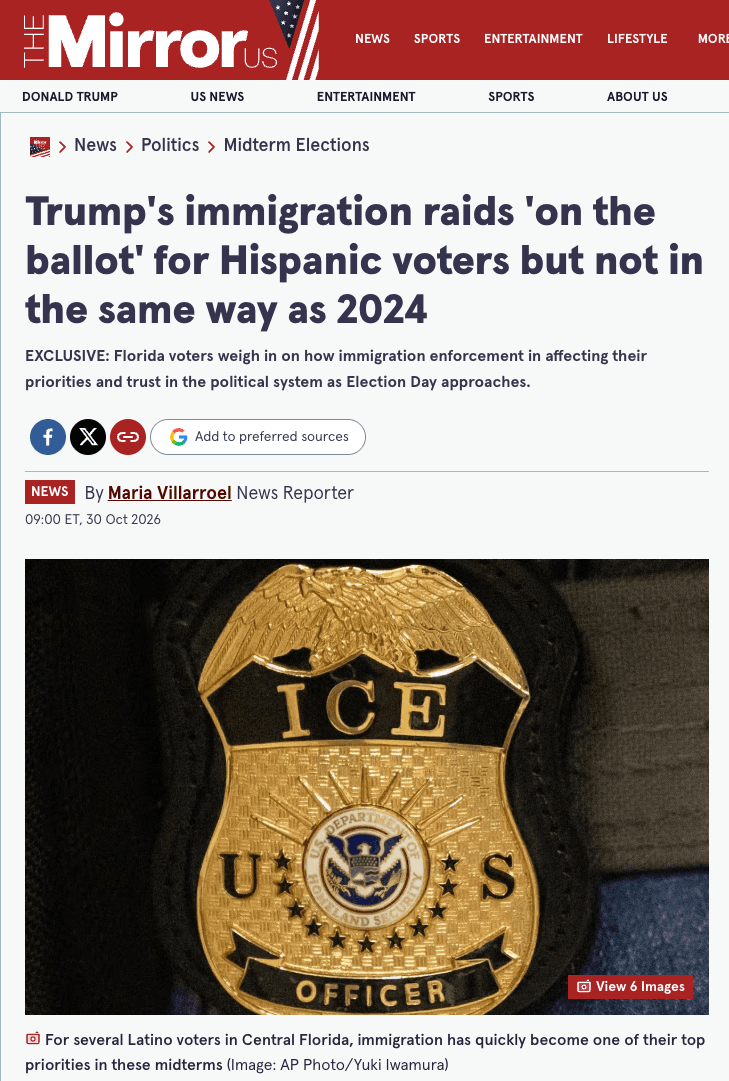
The Mirror US asks Florida voters how immigration enforcement is shaping the midterms. Loren Locke says immigration is on the ballot again, but this time the question is what enforcement looks like in voters' own neighborhoods rather than at the border.
From the Article
"Immigration will be on the ballot in November, but not the way it was in 2024. Two years ago, the argument was about the border. This year it's about what enforcement looks like in voters' own neighborhoods: masked agents, raids at workplaces and churches, and neighbors who have lived here for decades being detained."
"Trump promised to deport dangerous criminals."
"What voters have actually seen are farmworkers, restaurant cooks and construction crews, many of them in this country for twenty years. That gap between the promise and what happened is the story of this election on immigration."
Locke Immigration Law's Take
Loren's point is that the immigration debate has moved from the border to the places people live and work. That shift matters for people with legal status too. One voter in the article describes church members with visas and work permits being arrested. In our practice we see the same anxiety among H-1B workers, green card holders and their families: they have done everything by the book, yet they now wonder whether a routine encounter with an officer could go wrong.
The practical answer is to make your status easy to prove. Federal law already requires adult green card holders to carry their card and other noncitizens to carry evidence of their registration, such as an I-94 record. Keep your approval notices, EAD and I-94 current and in order, and make sure a family member knows where copies are kept. If an extension or change of status is pending, keep the receipt notice as well. Gaps in paperwork that never mattered before can cause real trouble in the current climate.
The article's first voter, a former DACA recipient, decided to become a citizen after years of putting it off. For green card holders who already meet the residence requirements, that is the decision we encourage most often right now. Citizenship is far more secure than any visa or green card, and it lets the holder vote in the elections that decide these questions. And if USCIS has not decided a naturalization application within 120 days after the interview, federal law lets the applicant ask a federal court to decide it.
Key Takeaways
- Loren Locke: immigration is on the ballot in November, but the question has moved from the border to "what enforcement looks like in voters' own neighborhoods."
- Loren Locke: voters were promised deportations of dangerous criminals but have seen "farmworkers, restaurant cooks and construction crews" detained, and that gap is "the story of this election on immigration."
- Polls cited in the article show immigration rising as a top issue and Latino voters moving away from Republicans since 2024.
- People with lawful status should keep proof of it current and close at hand, and eligible green card holders should consider applying for citizenship now.