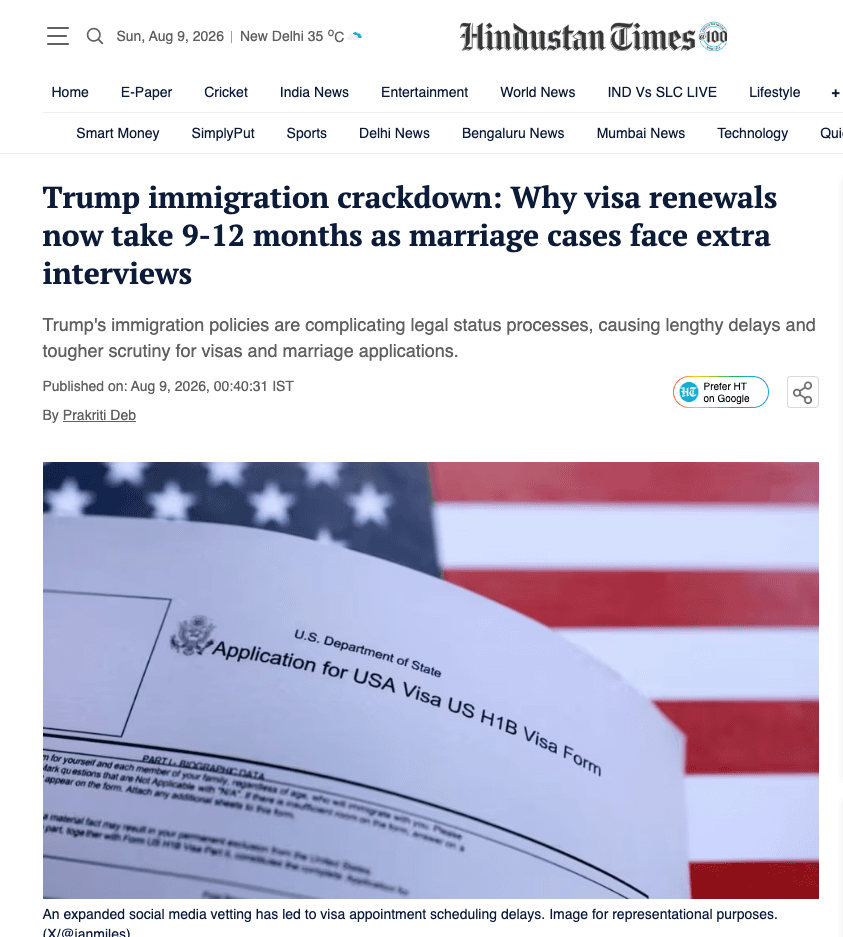
Hindustan Times' US Desk carries Loren Locke's warning — made to The Mirror US — that enforcement priorities have "done a complete 180" and that routine work-authorization renewals that should take weeks are now taking 9-12 months.
From the Article
"The legal grounds for deportation haven't fundamentally changed, but the enforcement priorities have done a complete 180."
"Routine visa renewals that should take weeks are taking 9-12 months."
Locke Immigration Law's Take
Hindustan Times is re-reporting, for its NRI readership, a survey of immigration lawyers that The Mirror US published a day earlier — Loren's comments were made to The Mirror US, and the fact that an Indian national daily picked them up within a day says something about where the anxiety is concentrated. Indian nationals are the largest population in the employment-based immigration system: the deepest green card backlogs, the heaviest H-1B representation, and the largest international student cohort. When enforcement priorities shift and processing stretches, this is the audience that feels it first and longest.
The two data points the piece leads with are the ones worth planning around. First, work-permit renewals that once turned around in weeks are running nine to twelve months, and USCIS generally will not accept a renewal filing more than six months before the current authorization expires — which means for many applicants the math simply does not close, and a gap in authorization is built into the timeline rather than being a worst-case scenario. Second, marriage-based cases are drawing second interviews and questions reaching back to filings made years ago, so the file has to be consistent not just internally but with everything the government already holds.
The practical posture for individuals is the same one Loren has been describing across this cycle: file everything at the earliest legally available date, treat the six-month renewal window as a deadline rather than an option, and assume the adjudication will be slower and more searching than the last one. For those with a long-term future in the United States — and particularly for the Indian professionals this piece is written for — the deeper answer is to reduce dependence on serial renewals altogether, whether through an employment-based green card, a self-petitioned EB-1A or National Interest Waiver, or naturalization once eligible.
Key Takeaways
- Hindustan Times' US Desk relayed Loren's comments to The Mirror US for an Indian audience: deportation grounds haven't changed, but enforcement priorities have "done a complete 180."
- Employment-authorization renewals that should take weeks are running 9-12 months, and USCIS won't accept a renewal more than six months before expiry — so authorization gaps are now structural, not exceptional.
- Marriage-based cases are drawing second interviews with detailed questions about applications filed years earlier, a sharp turn from the no-interview approvals of the prior administration.
- The four-year F-1 limit taking effect September 15, 2026 compresses the window for graduates to find sponsorship before their status expires.